
A leak in your pool can be more than just frustrating; if left unaddressed, the water loss that comes with it can quickly add up, increase your utility bill, and cause damage to both your pool equipment and the surrounding landscape. Knowing how to find a leak in a pool, how to repair it, and when to call a professional for assistance will help you avoid headaches and potentially expensive repair bills in the future.
Signs To Watch Out For
As with any household issue, it’s always best to start by observing your pool carefully. Some leaks are easy to spot, while others can hide in plumbing lines or beneath the pool surface, making them much trickier to locate, to the point where you may not even notice you have a leak for some time.
The most common signs of a leak we recommend looking out for when trying to find a leak in a pool include:
- Water level dropping more than what is expected from evaporation
- Constantly needing to add water
- Wet or soggy spots in the yard around the pool
- Air bubbles appearing in the return lines
- Cracks in the pool shell or deck
If you notice these signs, there’s a good chance that water is escaping somewhere in your system. The next step is to track down the source, and doing so early can prevent bigger issues down the road.
Confirm There Is a Leak With the Bucket Test
The bucket test is an inexpensive yet effective way to find a leak in your pool and can help to determine whether your pool is losing water due to a leak or just evaporation. It works as follows:
- Fill a bucket with pool water to about an inch from the top.
- Place the bucket on a step in the pool so that the water inside the bucket and the pool water are at the same level.
- Mark the water levels inside the bucket and on the pool wall.
- Wait for 24 hours without using the pool and on a day without rain.
After 24 hours, return and compare the water levels. If the pool water level has dropped significantly more than the water in the bucket, there’s a good chance you have a leak in your pool. This simple test works to rule out evaporation as the cause of water loss.
Perform a Thorough Visual Inspection
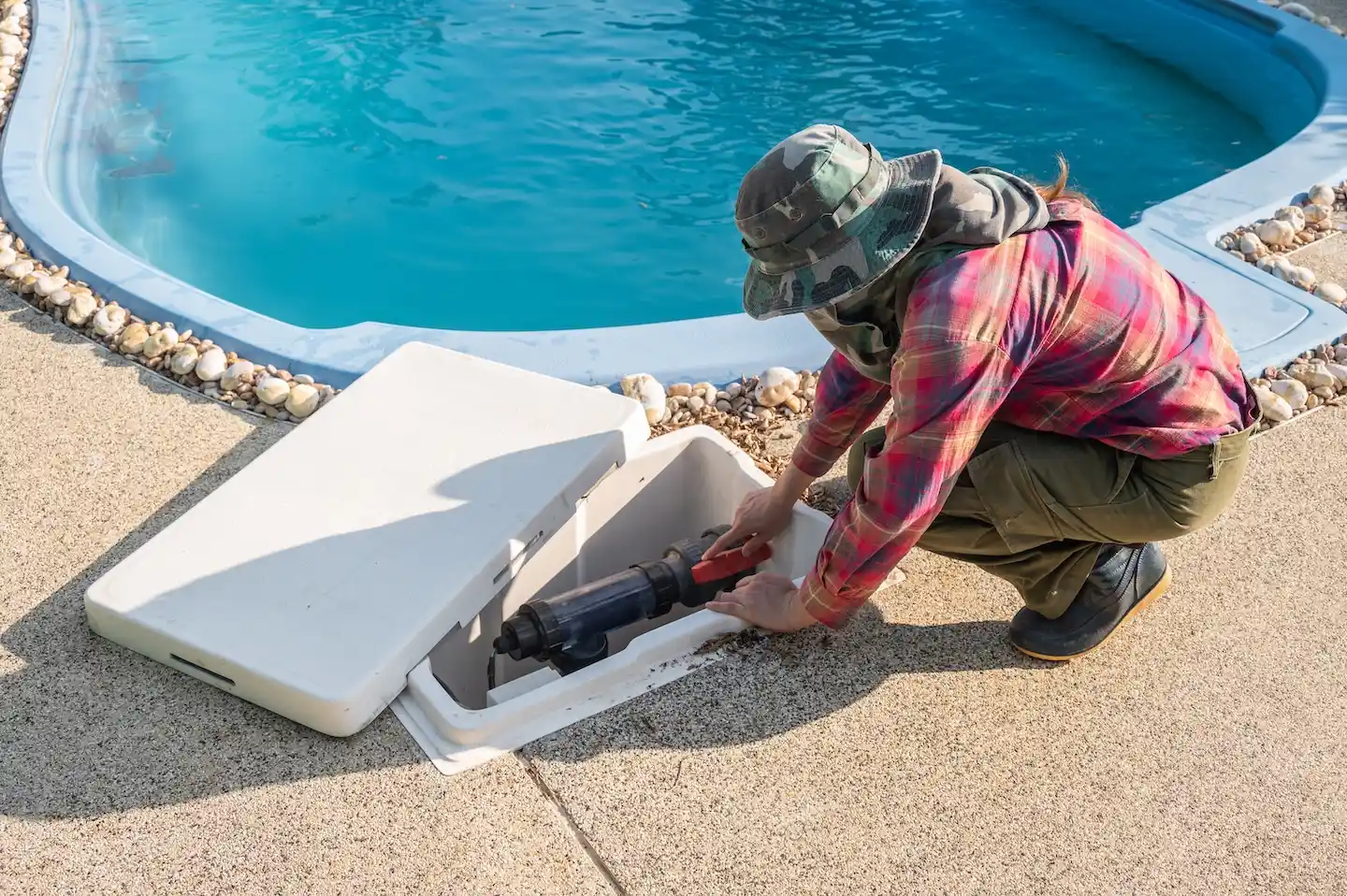
After having done a bucket test that suggests a leak, you’ll need to do a thorough visual inspection. Start by examining the pool shell, tile line, and any areas around fixtures like lights, steps, and skimmers. Visible signs to watch for include hairline cracks in plaster, gaps in grout, or loose fittings, as these may reveal where water is escaping.
If your pool has a vinyl liner, check for tears or holes along the liner edges, and around fittings. Small tears can sometimes be patched if found early, but keep in mind that some leaks in structural materials are difficult to see with the naked eye.
Use Dye Testing to Pinpoint the Leak
One of the most effective DIY techniques for how to find a leak in a pool is using a method called dye testing. Using a dye like food coloring or leak detection dye is non-toxic and can help to reveal the exact location where water is escaping.
- Turn off the pool pump and equipment to stop any ambient water movement.
- Wait 10-15 minutes until the water is still so you can see the dye behavior clearly. There should be no visible ripples, and, while not always possible, it’s best to do this on a day without wind.
- Add a few drops of food coloring or special leak detection dye near the areas you suspect.
- Watch how the dye moves in the water and where it goes.
If the dye is drawn toward a crack or gap, that is likely the source of your leak. Dye tends to move in the direction of leaks, as that will likely be a source of water flowing despite the deactivated pumps, helping you isolate the problem area.
Consider Pressure Testing For Hidden Leaks
Unfortunately, sometimes the leak is not in the pool shell but in the underground plumbing, making it much harder to detect using DIY solutions. Leaks in suction lines, return lines, or skimmer plumbing typically require specialized tools and methods to accurately find. Pressure testing is one such method, and involves isolating sections of plumbing and using a gauge to monitor whether pressure drops over time. A drop in pressure typically indicates a leak in that section of pipe. Professionals often use pressure testing equipment for quick and accurate results.
Call A Texas Innovative Pools Professional
While the above methods can be used for how to find a leak in a pool, hidden leaks deep in the plumbing or under decking will often require professional equipment and expertise to locate. Professional pool leak detection services, like those offered by Texas Innovative Pools, combine visual inspection with advanced diagnostic tools to pinpoint complex leak locations without unnecessary digging or guessing.If you suspect you may have a leak in your pool, or if you’ve found one and aren’t sure of what to do next, call Texas Innovative Pools at 880-220-5051 or contact us online today and let us help to get your pool fixed in no time!